Key takeaways
- Erg Chebbi is a sand sea in south-east Morocco, next to Merzouga and Hassilabied.
- It stretches for more than 20 km north–south, with dunes up to around 150 m high.
- It is surrounded by flat, stony desert (hamada), which makes it stand out dramatically.
- You can explore it on foot, by camel, by quad, by buggy or by 4x4.
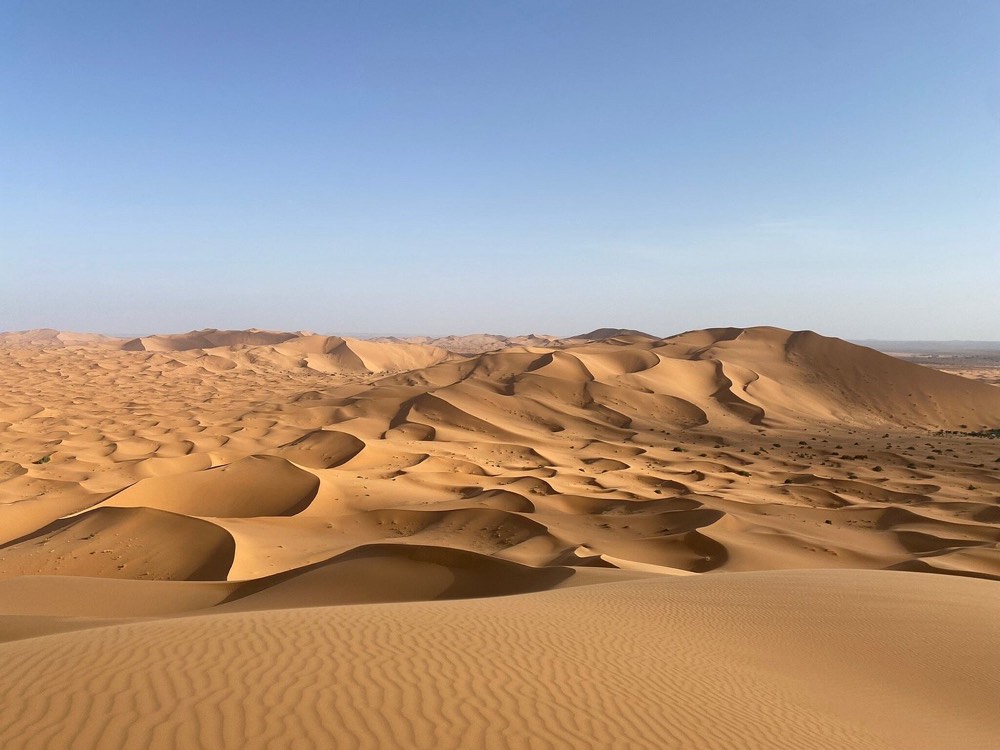
Erg Chebbi is the reason most people travel to Merzouga. Rising suddenly from a flat, dark, stony plain, its tall orange dunes look almost unreal — a fragment of the deep Sahara within reach of Morocco’s road network. This guide explains what Erg Chebbi is, where it is, how it formed, what lives around it and the best ways to explore it.
What is an erg?
In the Sahara, an erg is a large field of wind-blown sand dunes — what people often picture when they think of “the desert”. Most of the Sahara, in fact, is not sand at all but hamada (stony plateau) and reg (gravel plain). Ergs are where the wind has piled sand into great seas of dunes. Morocco has two major ones: Erg Chebbi near Merzouga and Erg Chigaga near M’Hamid.
Where and how big?
Erg Chebbi lies in the Drâa-Tafilalet region of south-east Morocco, south of Erfoud and Rissani. The villages of Merzouga and Hassilabied sit along its western edge. The erg stretches for more than 20 kilometres from north to south and is several kilometres wide. Its highest dunes rise to around 150 metres above the surrounding plain — tall enough that climbing one on foot takes real effort.
Because it is relatively compact and easy to reach, Erg Chebbi is the most accessible great dune field in Morocco. You can be in the middle of the sand within minutes of leaving your hotel.
How the dunes formed
The dunes are shaped by the wind, which carries sand across the desert and drops it where the flow slows down. Over long periods, sand accumulates into dunes that keep moving and changing shape. In Erg Chebbi, many of the larger dunes have the star-like form typical of places where winds blow from several directions, building tall peaks with ridges running out from the top.
That constant movement is why no two days in the dunes look the same — and why local knowledge matters. A track that was easy last week may now end in a steep slip face. Guides who ride Erg Chebbi every day read these changes instinctively.
Why the sand is orange
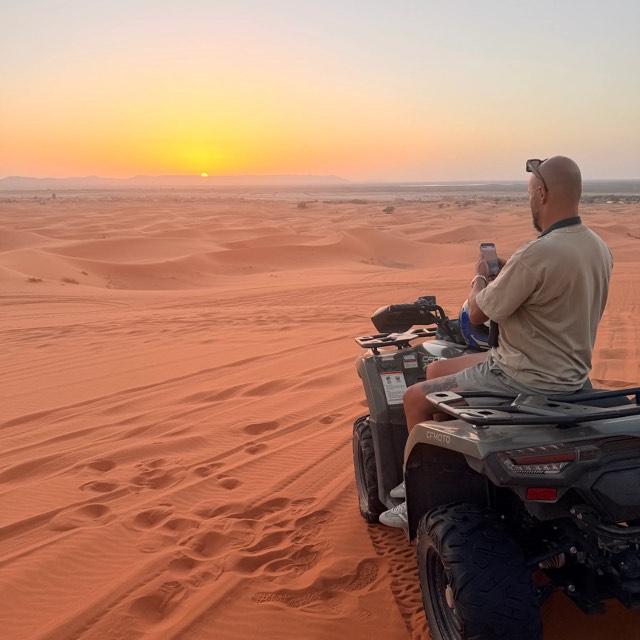
The sand of Erg Chebbi is famous for its warm orange colour, which comes from a thin coating of iron oxide on the grains. The colour changes dramatically with the light: pale gold at midday, glowing orange in the late afternoon and deep red at sunset. That is why sunrise and sunset are the favourite times for photographers.
Life around the dunes
Erg Chebbi is not empty. Nomadic families graze goats and camels around the edges, villages like Hassilabied, Merzouga and Khamlia line its western and southern sides, and in wet years a seasonal lake, Dayet Srji, forms to the west and attracts birds. Desert camps sit tucked between the dunes, and every evening camel caravans carry visitors out to them.
The wider region also has a long history. The Tafilalt oasis to the north was home to Sijilmassa, a great medieval caravan city at the northern end of trans-Saharan trade routes, and the rocks around Erfoud are rich in fossils.
How to explore Erg Chebbi
On foot
Walking into the dunes from your hotel, especially at sunrise or sunset, is free and wonderful. Climbing a big dune is hard work in soft sand — take water and go slowly.
By camel
The traditional way: slow, quiet and photogenic, usually towards a camp at sunset.
By quad
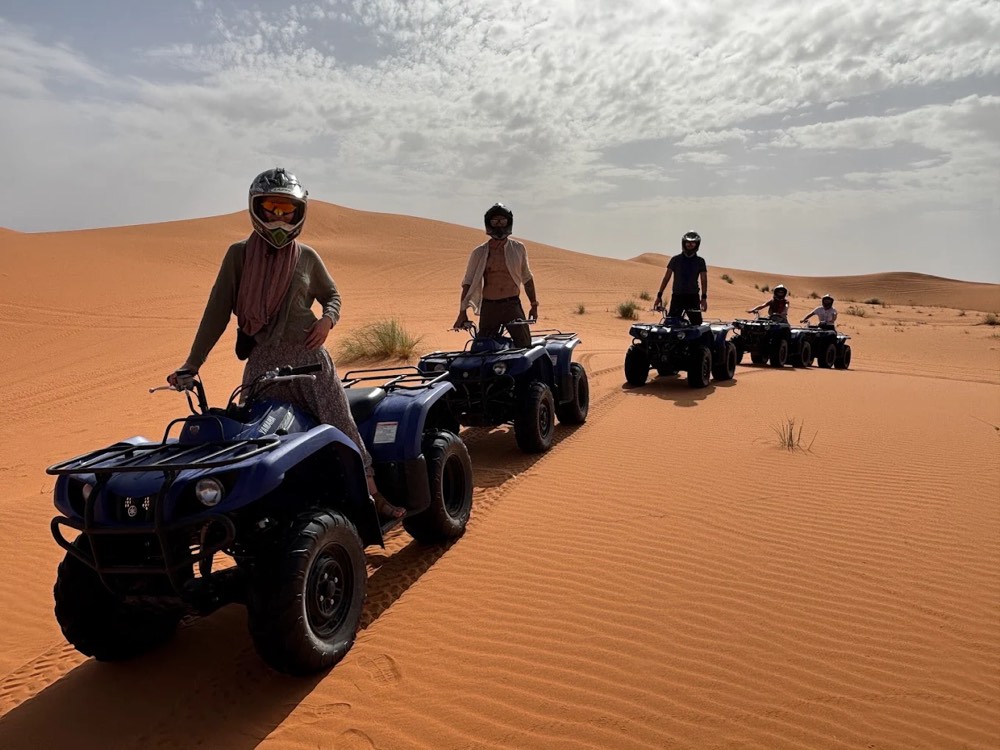
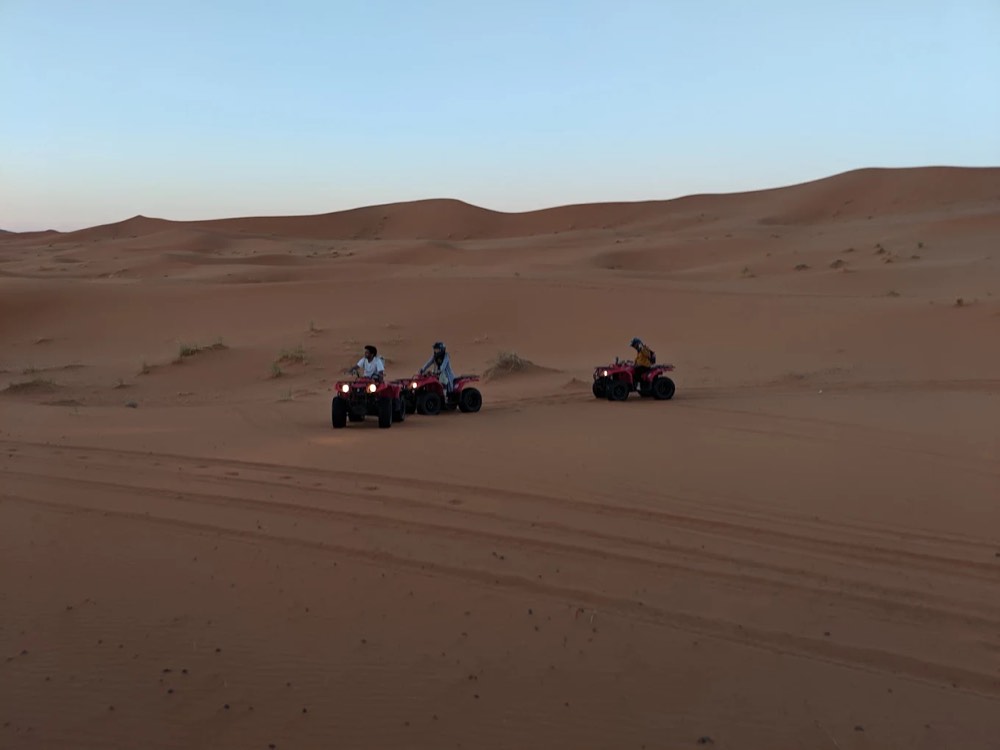
The fastest way to feel the scale of the erg. With a guide, you can reach viewpoints deep in the dunes in a short time. A 3-hour quad or a half-day tour lets you explore the dunes and the desert around them.
By buggy
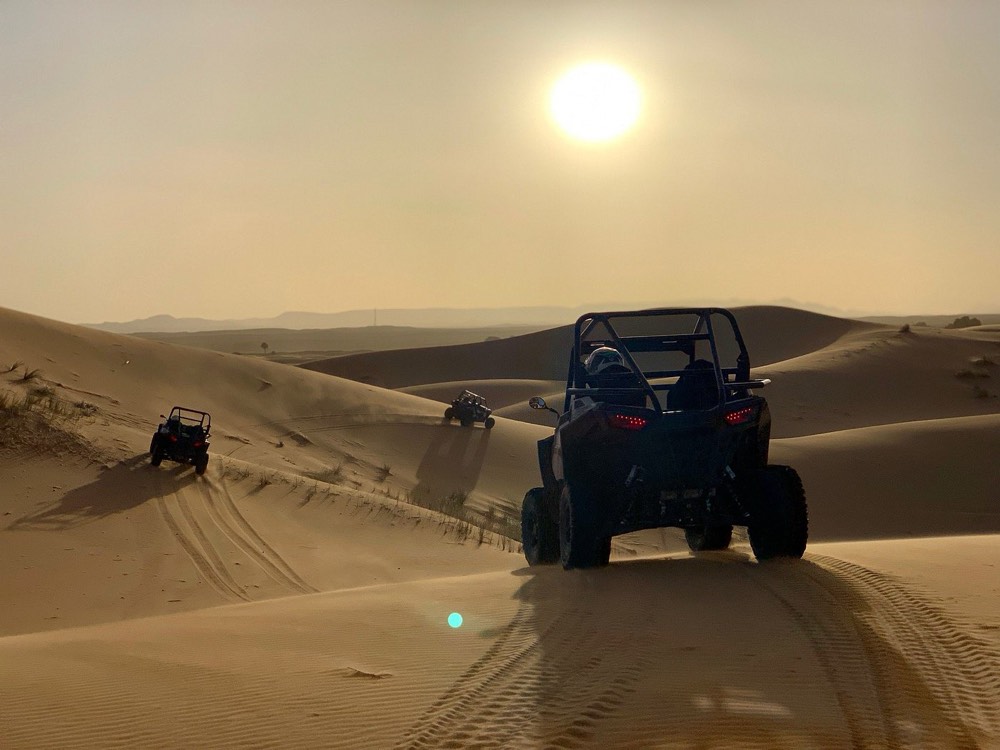
Side by side with seat belts — ideal for couples and families. Try the 2-hour buggy tour.
By 4x4
Good for longer loops around the erg, visiting villages and the surrounding desert.
When to visit Erg Chebbi
October to April offers the most comfortable temperatures for exploring the dunes, with warm days and cool nights. Summer is very hot in the middle of the day, so plan activities for sunrise and late afternoon. Spring can bring windy days that lift the sand. See our month-by-month guide for details.
How long to stay
One night is enough to see Erg Chebbi at sunset and sunrise. Two nights let you combine a desert camp with a full day of activities, and three nights give you time to explore the villages and the wider region at a relaxed pace.
Respecting Erg Chebbi
The dunes are a fragile environment and a home for people and animals. Take all rubbish with you, keep a respectful distance from camps, tents and herds, and slow down near people and camels. Ride with operators who follow the same principles — read how we work on our about page.
Ready to see it for yourself? Explore our Erg Chebbi quad tours.
Frequently asked questions
How high are the dunes of Erg Chebbi?
The highest dunes rise to around 150 metres above the surrounding desert.
Is Erg Chebbi part of the Sahara?
Yes. Erg Chebbi is one of Morocco’s two great sand seas (ergs) on the north-western edge of the Sahara; the other is Erg Chigaga near M’Hamid.
What does “erg” mean?
An erg is a large area of wind-blown sand dunes, as opposed to a hamada, which is a flat, stony desert plateau.
Written by the Merzouga Quad team in Merzouga village, Merzouga. First published 8 October 2026.